 Igor Santos
Pipeimob
Brazil's first TRM platform integrated with a Digital Bank — I worked across two squads, with Bubble.io and integrations as my main front.
- Client
- Pipeimob
- Role
- Software Engineer
- Period
- 2025 — 2026
- Duration
- 8 months
Overview
Pipeimob is Brazil's first Real-Estate Transaction Management (TRM) platform integrated with a Digital Bank — sales CRM, post-sale and rental automation, and integrated financial solutions in a single ecosystem. I worked across two squads (Banking and Rentals). My direct contribution was on Bubble.io — workflows, custom plugins and performance — and on the REST API integrations with banking and tax services.
- Bubble.io
- Bubble plugins
- REST APIs
- Asaas
- Celcoin
- Tax document issuance (NFe)
Problem
Real-estate operations have a CRM in one tool, rental management in another, and billing/commission in a third — each with its own reconciliation spreadsheet. Late billing, miscalculated commissions, rentals without an audit trail. On a platform integrated with a digital bank, every financial bug becomes real operational risk.
- CRM, rentals and finance living in separate systems, with no unified audit trail.
- Commissions follow split rules per agency, agent and partner — manual calculation was prone to recurring discrepancies.
- Billing and receivables anticipation required real-time tax issuance and notary office integration.
Process
Working across two squads — Banking and Rentals
Active in both: Banking (the product's financial layer) and Rentals (end-to-end TRM). Small squads at scale-up cadence, with reviewed and shared code across both domains.
Banking — financial flows with higher operational risk
The platform moves R$ 40MM/month in commissions. Automated splits, receivables anticipation and tax issuance require traceability, failure handling and data consistency — the focus was stability, audit trails and functional validation across the financial flows.
Rentals — end-to-end TRM
Post-sale and rental automation: contracts, recurring billing, receipts, tax documents and integrations with notary offices certified in São Paulo, Rio de Janeiro, Santa Catarina and Rio Grande do Sul.
Bubble as the central piece + custom plugins
Most of the product is built on Bubble.io. I shipped my own plugins to fill platform gaps and standardize UI/UX components across the two squads.
Performance and standardization as routine
Refactored critical Bubble flows with high-grade techniques: cutting redundant calls, optimizing workflows, debouncing heavy writes, standardizing naming and data type structure.
API integrations as the product's boundary
The financial and tax fronts depend on platform-to-platform communication: Asaas and Celcoin integrations in the Banking squad, REST calls, error handling and retries, data reconciliation, and troubleshooting when a partner changes an API contract without notice.
Technical decisions
- 01
Bubble as serious engineering, not a shortcut
Bubble.io ships fast, but scales only if engineering is disciplined: custom plugins, component standardization, workflow optimization. I treated Bubble like any serious language — code review, performance budget and our own plugins to cover gaps.
- 02
Scope: product stack vs. what I worked on directly
The platform is bigger than my front. The product had backend services maintained by other people on the team; my direct work was Bubble.io (workflows, plugins, performance) and the REST API integrations. I'd rather draw that line than inherit credit for work that isn't mine.
- 03
Banking squad treats errors as incidents
In financial flows, a failure has direct financial impact. Every deploy went through dual review and rollback was a planned path, not an exception. Monitoring and functional validation across splits, anticipations and tax issuance were part of the standard flow.
- 04
Bubble plugins to standardize across squads
Recurring components (complex forms, uploads, masks, BR-specific validation) became shared plugins between Banking and Rentals. Reduces divergence and maintenance cost without locking the team into a rigid framework.
Gallery

Pipeimob office — where the product gets built. 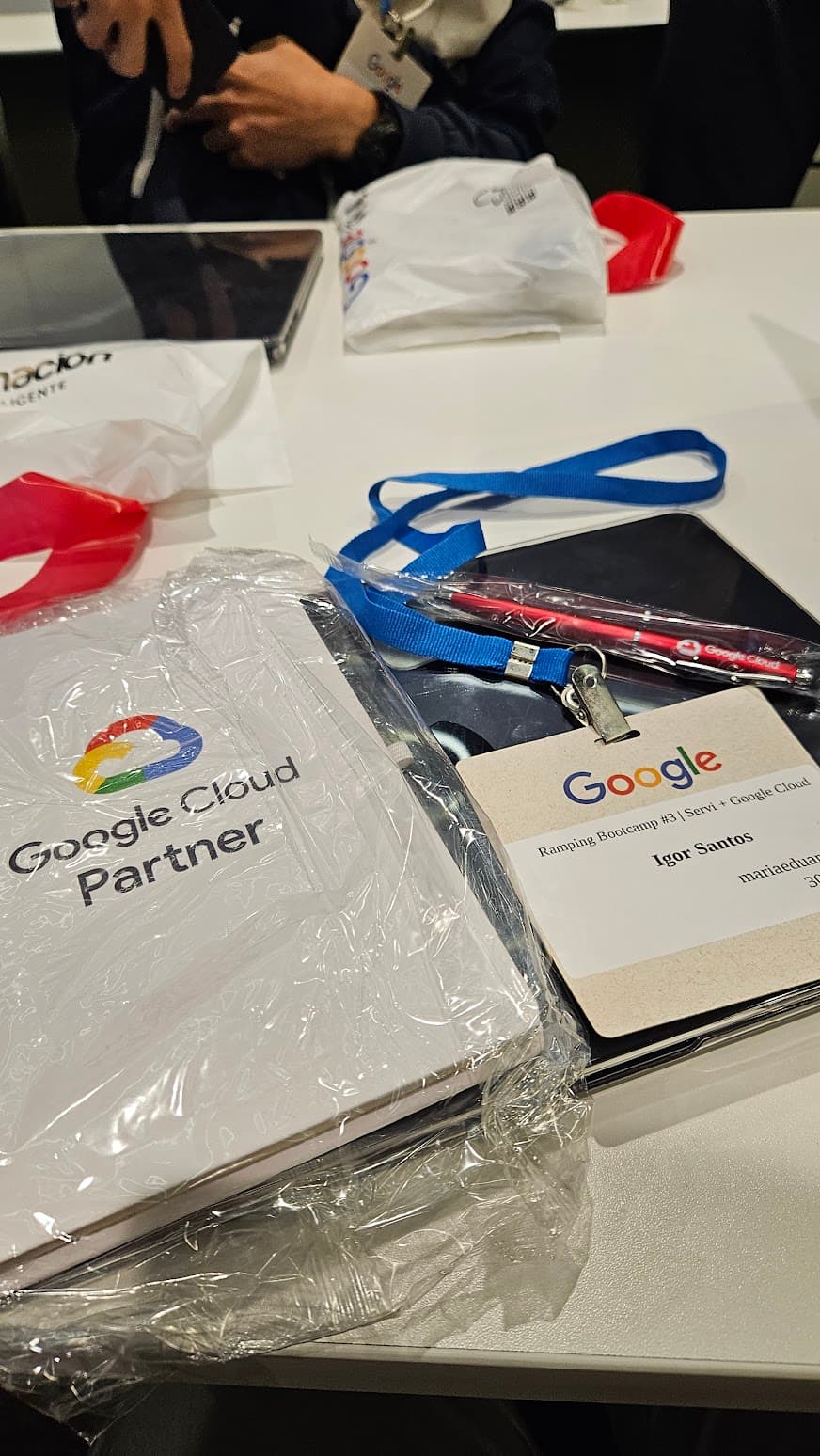
Servi + Google Cloud Bootcamp — Ramping #3 badge, part of the team's technical immersion. 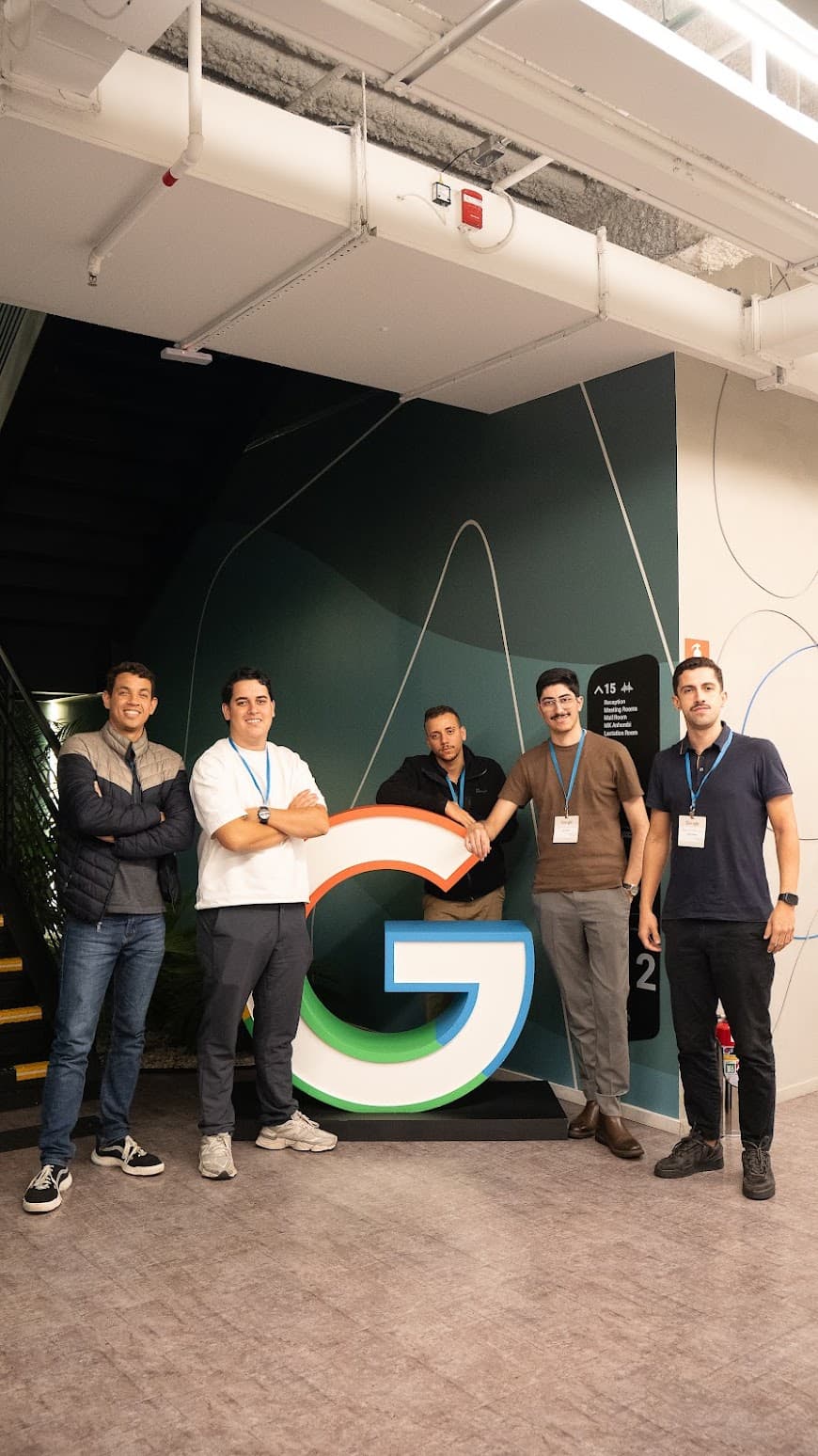
Pipeimob team at Google's São Paulo office during the Google Cloud Partner ramping. 
Google Cloud Partner technical immersion — Google's São Paulo office.
Results
Platform indicators (agencies, commissions, partners) are public on Pipeimob's website (May 2026) and describe the product as a whole, not my individual contribution — I worked as a developer assigned to two squads.
- Squads I worked in
- Banking + Rentals
- What I worked on directly
- Bubble · Custom plugins · REST integrations
- Agencies on the platform
- 400+ across 13 states
- Commissions processed/month
- R$ 40MM
- Enterprise partners
- Lopes · RE/MAX · Keller Williams · Auxiliadora Predial · Foxter · Loft, among others
Lessons
- Bubble done well is serious engineering — plugins, standardization and performance budgets matter as much as in any stack.
- In a banking squad, ambiguity is expensive: clear rules, dual review and a planned rollback path. I learned to defend that discipline in code review.
- Working at a financial scale-up taught me to balance speed with discipline — the cadence is high, and so is the risk.
Current state
Platform running in production serving 400+ agencies across 13 states, processing R$ 40MM/month in commissions, with integrations certified in notary offices across SP, RJ, SC and RS and enterprise partners like Lopes, RE/MAX, Keller Williams and Auxiliadora Predial. I worked across the Banking and Rentals squads, focused on Bubble.io, API integrations, performance and standardization.